
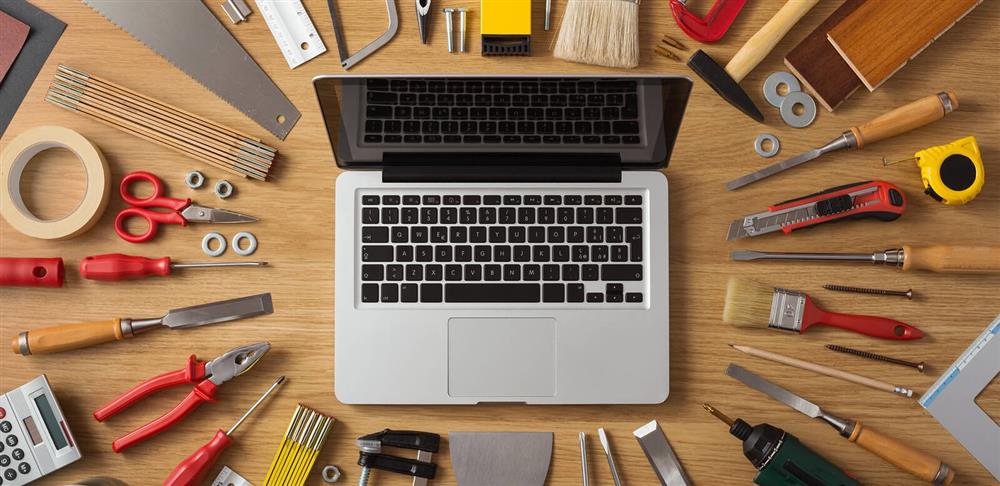
Introduction: The Silent Architects of Modern Civilization
In the quiet hum of servers and the soft tap of fingers on glass screens, a silent revolution unfolds every day. Technology and tools—often taken for granted—form the underpinnings of modern civilization. From ancient stone implements to artificial intelligence algorithms, our tools have evolved not merely in function, but in their ability to transform societies. The convergence of technology and tools doesn’t just accelerate progress; it defines it. In this article, we explore how these essential components shape industries, redefine human potential, and reimagine the future.
The Evolution of Tools: From Primitive to Precision
Human history is inextricably linked to tools. Early humans carved stones to cut meat, lit fires for warmth, and gradually learned to manipulate the environment. The Industrial Revolution mechanized these efforts, giving birth to factories, assembly lines, and mass production. However, it is in the last few decades that we’ve witnessed a dramatic acceleration—from analog to digital, manual to automated, mechanical to intelligent.
Key Milestones in Tool Evolution:
-
Stone Age to Iron Age: Basic survival to agricultural tools.
-
Industrial Revolution: Machines replacing manual labor.
-
Information Age: Emergence of computers and the internet.
-
AI & Automation Era: Intelligent tools capable of learning and evolving.
Technology: The Invisible Framework
Technology is more than gadgets or software; it is a mindset—an approach to solving problems, creating efficiencies, and unlocking new possibilities. The shift from isolated tools to interconnected systems has given rise to digital ecosystems where software, hardware, and data coexist in seamless harmony. Cloud computing, big data analytics, Internet of Things (IoT), and blockchain are not just buzzwords—they are the scaffolding upon which modern life is built.
How Technology Transforms Environments:
-
Healthcare: Robotic surgery, telemedicine, and diagnostics powered by AI have revolutionized treatment and accessibility.
-
Education: Virtual classrooms, learning management systems, and digital libraries democratize access to knowledge.
-
Finance: Fintech platforms offer smart investment tools, blockchain ensures transparent transactions, and algorithms drive risk assessment.
-
Manufacturing: Industry 4.0 leverages smart sensors and predictive maintenance, reducing downtime and maximizing output.
Tools of the Trade: The Hands of Technology
Tools, in essence, are the physical or digital means through which technology is executed. Software platforms, mechanical devices, coding languages, analytical frameworks—all serve specific, utilitarian purposes. In today’s world, tools are often specialized, modular, and integrated, enabling professionals across sectors to perform with unmatched precision and efficiency.
Examples of Modern Tools:
-
For Developers: GitHub, Visual Studio Code, and Docker.
-
For Designers: Adobe Creative Cloud, Figma, and Blender.
-
For Project Management: Trello, Asana, and Notion.
-
For Data Analysis: Python, R, Tableau, and Power BI.
Each of these tools is not just a utility; it is an extension of human intellect. The ability to build, modify, and optimize with these tools marks the line between average performance and exceptional results.
The Human-Tech Symbiosis
One of the most critical aspects of modern technology and tools is how seamlessly they integrate into human workflows. The term “augmented intelligence” describes a relationship where machines don’t replace humans but enhance their capabilities. In this symbiosis, the human provides context, creativity, and ethical reasoning, while the tool offers speed, scale, and accuracy.
Benefits of This Collaboration:
-
Increased Productivity: Automated tasks free up time for strategic thinking.
-
Enhanced Creativity: Tools like AI-generated art or music aid creative expression.
-
Decision Support: Data-driven insights improve judgment and reduce bias.
-
Accessibility: Assistive technologies empower individuals with disabilities to engage fully with the world.
Ethical Considerations: The Double-Edged Sword
As with any advancement, technology and tools come with caveats. Surveillance, misinformation, job displacement, and digital addiction are pressing issues. Tools are inherently neutral—it is their application that defines their impact. Thus, ethical development, responsible deployment, and inclusive design are essential for sustainable progress.
Core Ethical Principles to Uphold:
-
Transparency: Users must understand how tools operate and make decisions.
-
Privacy: Data handling must be secure and respectful.
-
Inclusivity: Tools should serve diverse populations equitably.
-
Accountability: Developers must take responsibility for outcomes.
Future Trends: What Lies Ahead?
Looking forward, the boundary between tool and user will continue to blur. Brain-computer interfaces, quantum computing, and immersive realities (like AR and VR) hint at a future where interaction is instinctual and instantaneous. Tools will not only respond to commands—they will anticipate needs.
Notable Emerging Trends:
-
Edge Computing: Real-time data processing close to the source.
-
Digital Twins: Virtual replicas of physical systems for simulation and diagnostics.
-
Hyperautomation: Entire workflows being automated end-to-end using AI and ML.
-
Sustainable Tech: Green computing, biodegradable electronics, and energy-efficient systems.
Conclusion: The Quiet Catalysts of Change
Technology and tools, though often operating in the background, are the silent architects of progress. They expand our reach, multiply our impact, and refine our purpose. The elegance of a well-designed tool lies not in its complexity, but in its ability to simplify. As we continue to push boundaries and explore new horizons, our tools will evolve with us—sharpened not only by code and circuitry but by imagination and responsibility. In embracing this partnership wisely, we do more than build better systems—we craft a better future.

